
A mobile mechanic in Keene NH sees the same faults over and over, and most of them give you warning first. This guide covers the problems we get called out for most around the Monadnock region, what each one usually turns out to be, and whether it means stop driving now or book it in soon. Call 603-945-0799.
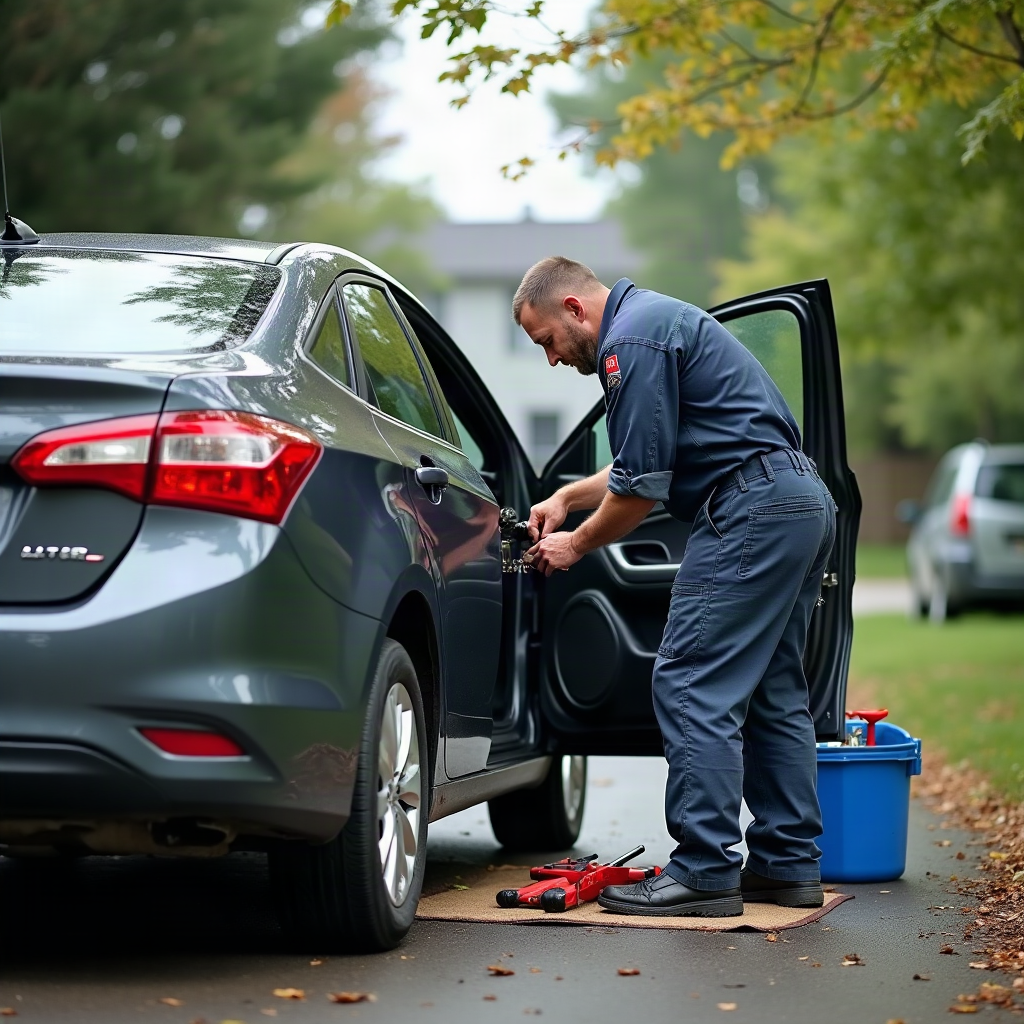
Cheshire County is hard on cars in specific ways, and the fault list reflects it. Winters are long and genuinely cold, which finds every weak battery, every tired starter and every hardened rubber component. Road salt attacks brake lines, exhaust systems and suspension components from underneath. Spring leaves frost heaved roads and potholes that wreck alignment and shock absorbers.
Then there is the driving itself. A run out Route 9 toward Brattleboro or east on Route 101 over the hills past Marlborough and Dublin is sustained climbing and descending, which is far harder on brakes and cooling systems than flat commuting. Short winter trips around town never get the engine fully warm, which is its own kind of wear.
One more thing matters now. New Hampshire’s mandatory annual safety inspection program is currently suspended, so for most drivers nobody is checking the car once a year any more. Safety laws still apply and you can still be pulled over for unsafe equipment, but the yearly set of eyes on your brakes, tires, lights and suspension has gone. Anything that gets caught now gets caught because somebody chose to look.
These are the symptoms where continuing to drive risks either your safety or a much larger repair bill. Call rather than drive.
A pedal that sinks toward the floor, or needs pumping to feel firm, points at a fluid leak or air in the system. This is the one fault on this page where we would say leave the vehicle where it is and call.
Pull over and shut the engine off. An overheating engine can go from a hose or a thermostat to a warped head in a surprisingly short distance. Cheap to fix cold, expensive to fix hot.
Squealing is a warning. Grinding is the warning having been ignored, and means the friction material is gone and metal is cutting into the rotor. Every mile adds parts to the job.
Noticeable play at the wheel, or a car that will not track straight, can be a worn tie rod or ball joint. These give way suddenly rather than gradually.
A steady light means get it read soon. A flashing one means a misfire that is dumping raw fuel into the exhaust, which destroys a catalytic converter quickly. Flashing is a stop driving symptom.
Any smoke from under the hood, and any smell of gasoline inside or outside the vehicle, is a stop immediately and call symptom. Do not try to reach home with it.
These faults need attention and will get worse and dearer if ignored, but they are not a reason to abandon the car where it sits.
The classic Cheshire County fault, and almost always the battery rather than the starter, especially on the first hard frost after a warm fall. A load test settles it in minutes. Batteries that struggle in November fail in January.
Usually the wear indicator doing precisely its job, telling you the pads are near the end. Caught here it is a pad replacement. Left two months it becomes pads, rotors and sometimes a caliper.
Often a sensor, a loose connector or an evaporative emissions fault rather than something dire, but the only way to know is to read the code and test the circuit. Guessing at parts here is how people spend money twice.
Typically a slow refrigerant leak rather than a failed compressor. Worth finding the leak rather than just recharging it, because a recharge over an unfixed leak is money you spend again next summer.
A knock from the front over bumps usually means worn shock absorbers, bushings or sway bar links. Our roads find these fast. They make the car handle badly long before they fail outright.
A rasp or drone that was not there last week is often an exhaust joint or hanger that road salt has eaten through. Cheap and simple early, a section replacement later.
What drivers around Keene ask most when something changes.
1
Usually yes. An intermittent no start that correlates with cold or with the car sitting for a day or two is the signature of a battery losing capacity. A load test gives a definite answer rather than a guess.
2
Yes. We bring the scan tool to the vehicle, read the stored codes, and test the circuit the code points at rather than just replacing the part the code names. That distinction saves real money.
3
A steady light generally means drive gently and get it looked at soon. A flashing light means stop driving, because an active misfire can ruin the catalytic converter within a short distance.
4
There is no fixed number, because it depends far more on how and where you drive than on mileage. A lot of hill descending on Route 101 or Route 9 wears pads faster than flat town driving.
5
The four things the inspection used to catch for you: brakes, tires, lights and suspension. Look at your tire tread, notice any new noise when braking, and have somebody check the lights occasionally. Those cover most of it.
6
Wherever the job allows, yes. The van carries the tools and the common parts for the faults on this page. Where a part has to be ordered we tell you before we leave.
For what a repair is likely to cost before you call, see the pricing ranges in the guides at Helpful Guides Keene NH. If something on this page matches what your car is doing right now, Mobile Mechanic Keene NH will come out to it, seven days a week.
Call 603-945-0799 and describe the symptom. We come to the car in Keene NH.